

Wholesale Wood Carvings
Wooden Hand-Held Objects
Palm-sized wood carvings for gift shops, museum stores and branded collections. Explore animal figures, traditional motifs, smooth palm shapes and pocket keepsakes.
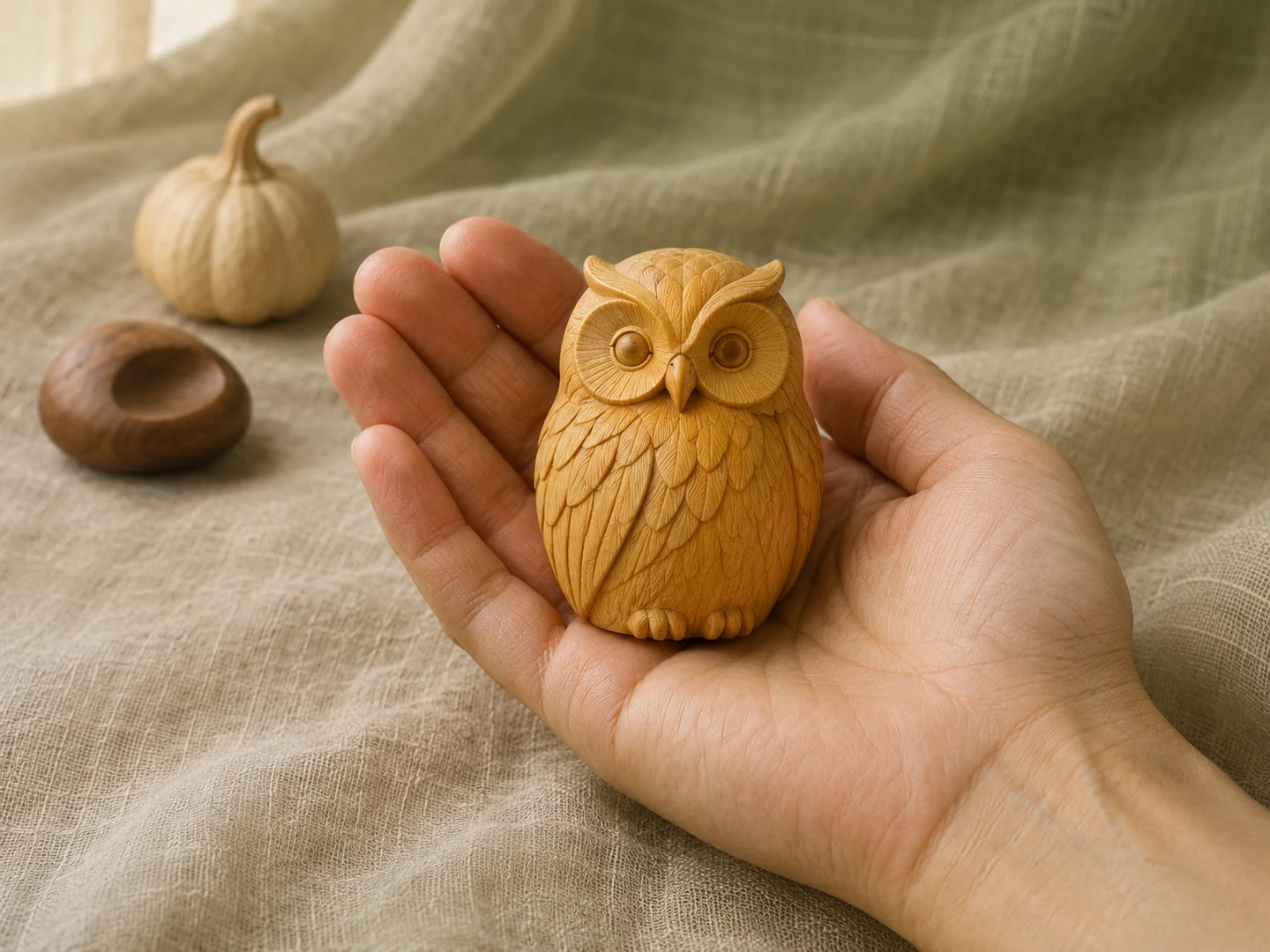
Four styles to build your assortment
Start with the shape and use that fit your customers. Illustrations show design directions for discussion and sampling.

Symbolic & Traditional Carvings
Bottle gourds, lotus motifs and other traditional forms for collectible and gift assortments. Approve the reference, motif placement and relief depth so the intended details stay legible at a small scale.

Wooden Worry Stones & Palm Shapes
Smooth pebbles, rounded hearts and thumb-groove shapes sized for the palm. Compare the groove, thickness and edge radius on a finished sample to find a shape that feels comfortable to hold.
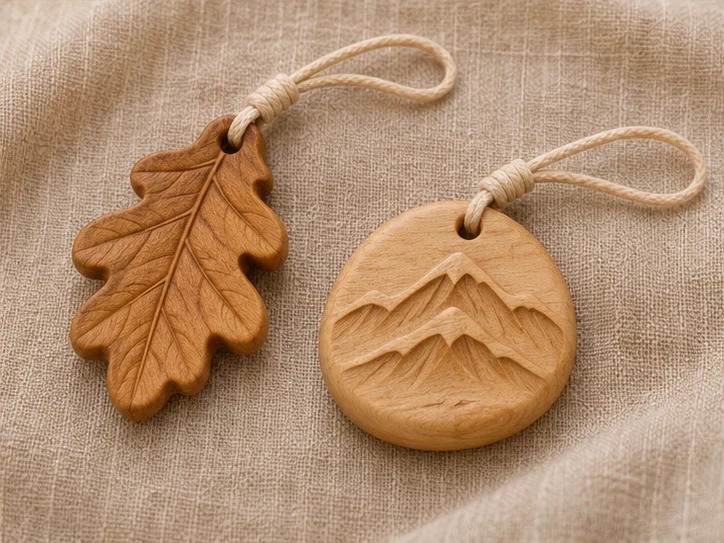
Pocket Keepsakes & Charms
Small relief tokens, leaf carvings and cord-ready pieces for souvenirs or branded gifts. Check cord clearance, the edge around the drilled hole and space for a mark before choosing the final size.
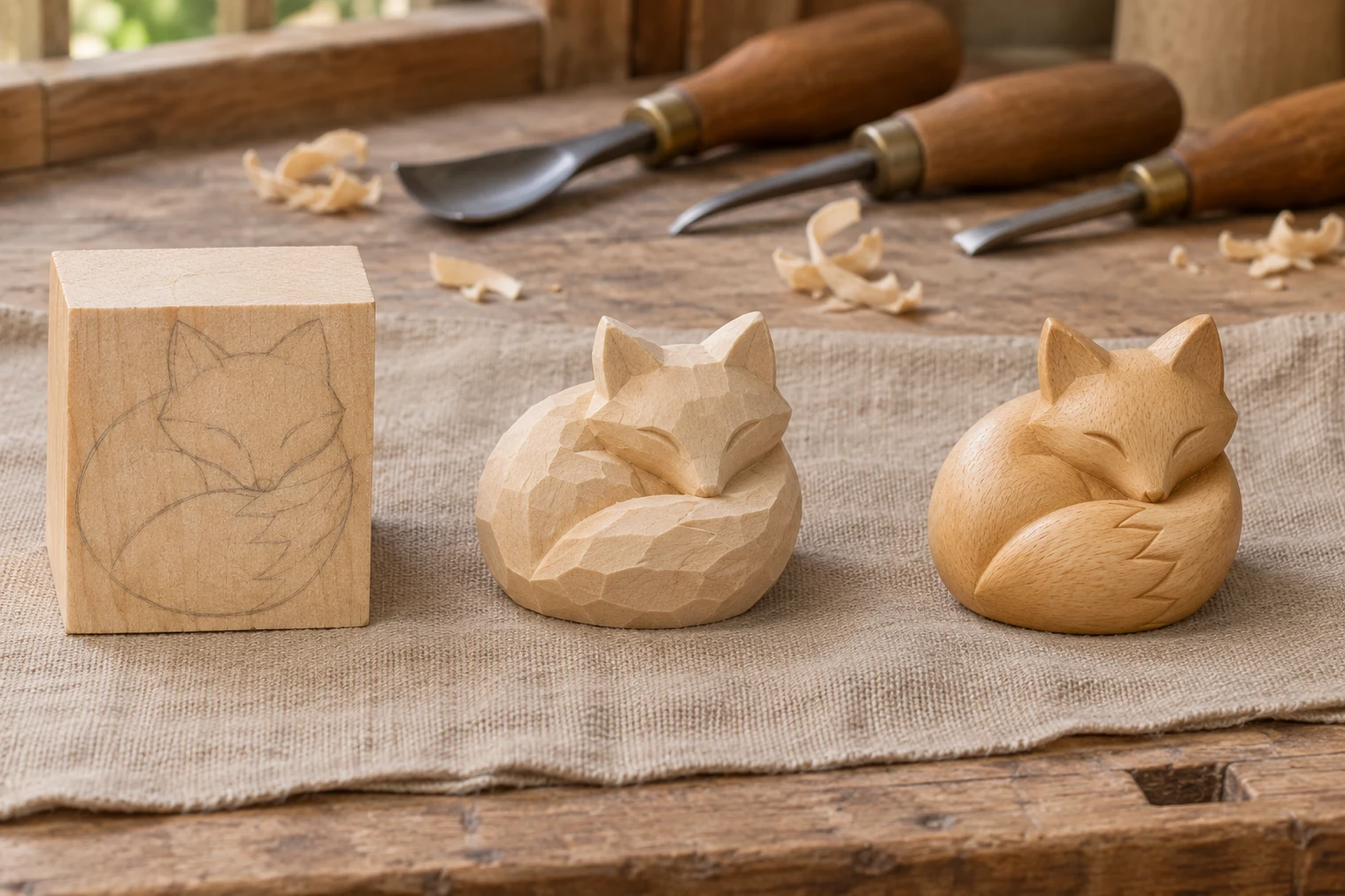
From blank to finished carving
The same form goes through several decisions before it becomes a piece someone wants to pick up. Here’s what to discuss at each stage.
Select the wood and grain
Start with a sound blank. Discuss grain direction where a design has thin tips or a drilled hole.
Shape the silhouette and carve the detail
Review the main profile first, then check relief lines, rounded joins and details from more than one angle.
Sand, finish and inspect
Agree on the feel and sheen on a sample. Inspect thin features, grooves and the underside before approving the finish.
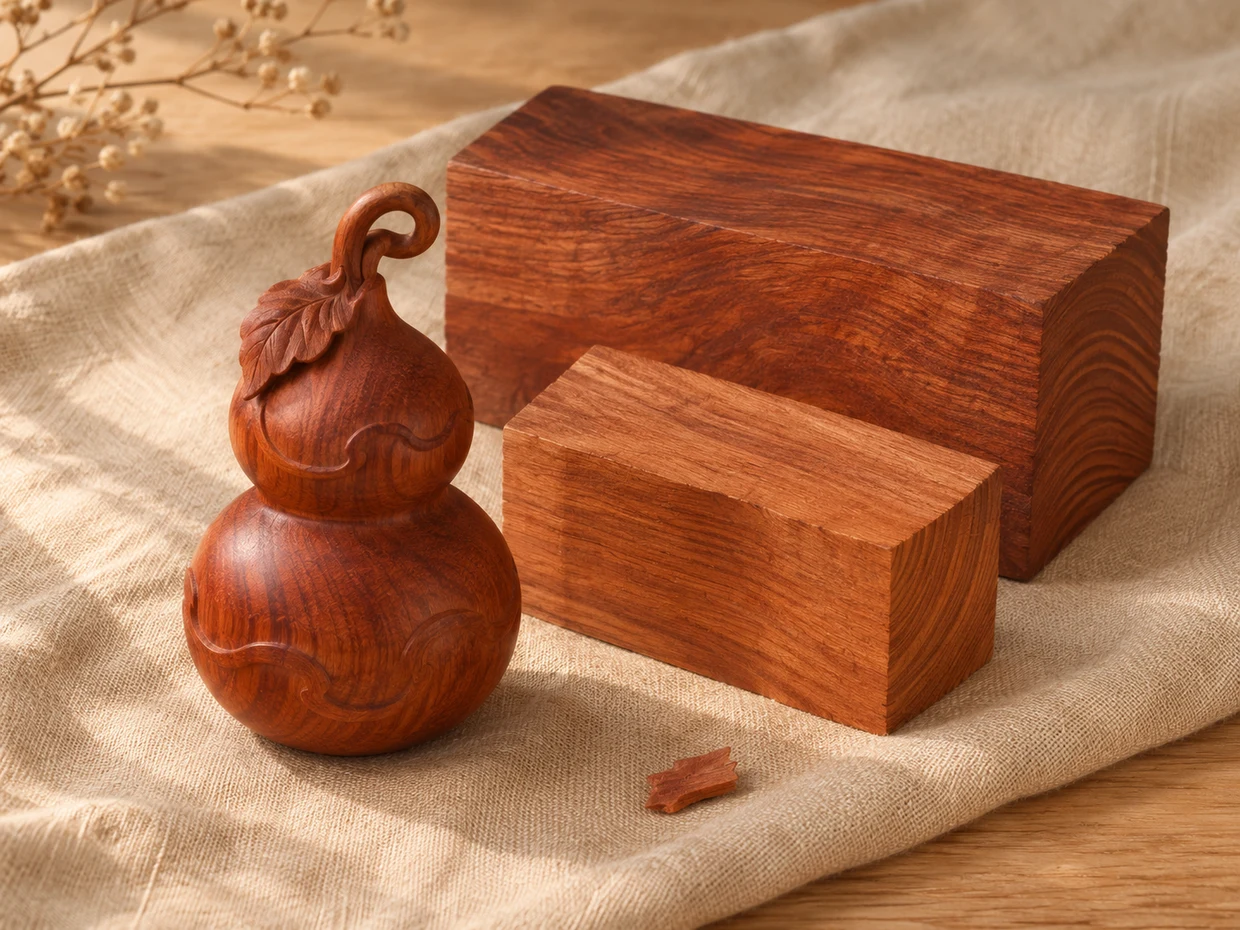
Illustrative material study. Review the selected species and finish on a physical sample.
Choose wood for the design and feel
Hongmu brings a warmer, deeper tone to the range. Compare it with lighter and darker wood options according to the shape, level of detail and finish you want.
Hongmu hardwood
SYLVO offers Hongmu for selected carvings. Compare the reddish-brown tones and grain on a sample. Ask for the exact species, origin and any documentation your market or buying team requires.
Boxwood
Dense and fine-textured. Discuss it for small relief lines and crisp detail, and confirm the species and usable blank size before sampling.
Basswood
Pale and fine-textured, with a softer feel when cut. Compare edge marks and dent susceptibility on the finished sample if the piece will be handled often.
Walnut
A darker option with more visible variation in grain and tone. Review the finished surface and approval range, especially if you need a small engraved mark to stand out.
Match the carving method to the shape
The right process depends on the depth of the detail, how the piece will be handled and what needs to be consistent across a run.
Carving in the round
A shape worked on all sides for pieces such as animals and gourds. Review the back and underside as well as the front. A rounded silhouette is easier to handle than thin projecting details.
Low-relief carving
A motif cut into or raised from a flatter surface, useful for tokens and small keepsakes. Check how the lines read in ordinary shop lighting and how the edges feel under the thumb.
Repeatable rough shaping
CNC roughing or a shaping jig can help hold the overall dimensions across a run. Specify the areas that need further carving or sanding and approve the finish on the actual material.
Engraving and logo marking
A name or logo can be discussed separately from the main carved form. Laser marking may darken the surface, so review contrast, position and legibility on a finish sample.
What to check on a finished sample
A good sample shows how the carving feels, which natural variations to expect and how the pieces will arrive on your shelf.
Fit in the hand
Specify length, width and thickness in millimeters. Approve the weight and the feel of the grip or thumb groove on a physical sample.
Edges and small details
Run a finger over rims, corners and cord holes. Check for rough fibers or chipped areas around thin features such as ears, stems or relief lines.
Grain and finish variation
Compare samples under the same lighting and record acceptable differences in tone, grain and sheen. Flag cracks and unwanted tool marks separately.
Display and packing
Confirm how the piece sits, whether a cord or pouch is included, and where the barcode or brand mark goes. Check that packaging keeps carved details from rubbing in transit.
Plan your wholesale order
Send enough detail to discuss the design, compare a sample and confirm the quote.
Send your brief
Share the design references, dimensions in millimeters, estimated units per style, destination and target date. Mention any wood, branding or packaging requirements.
Review the sample
Check the silhouette, grain, finish and packaging in person where possible. Agree on acceptable variation and record the approved sample for the order.
Confirm the order
Confirm the minimum quantity, sample or setup costs, lead time and packing with your quote. Keep the approved wood, finish and marking details with your purchase order.
Wholesale Wood Carving FAQ
Can I request a custom shape or design?
Send a sketch, reference images or a physical reference, along with target dimensions and estimated quantity. Feasibility depends on wood, the amount of detail and whether any areas are too thin for regular handling.
Are the pieces hand-carved or machine-shaped?
The process depends on the design. For the style you are considering, ask which surfaces are carved, machine-shaped, engraved or finished by hand. Review these details on a sample before signing off.
Can I request Hongmu for a hand-held carving?
Yes. Share the design, target size and delivery market. Confirm the exact species and review a finished sample, as appearance, blank size and documentation can vary by the wood selected.
Which wood is best for a small carving?
Choose according to the job. Boxwood can hold fine lines, basswood is worth comparing for a pale carved form, and walnut gives a deeper natural tone. Confirm the specific species, availability and finish when you request a quote.
Will every piece have the same color and grain?
Wood varies from blank to blank. Ask for a range of reference samples and agree on acceptable variation before ordering, especially if pieces will be sold as a matching set.
Can I order samples and get wholesale pricing?
Share the styles, estimated units per style and delivery country so sample availability, order minimums, cost and timing can be confirmed for your project.
Can a carving carry a logo or be packed for retail?
Share artwork and your preferred location for a mark, plus any barcode, cord, pouch or box requirements. Approve the mark and the packing method on a sample before the order.
How should wooden hand-held objects be cared for?
Keep pieces dry and use a clean, soft cloth for routine wiping. Ask for care guidance for the approved finish before using oils or cleaners. Tell us if your intended use requires specific testing or labeling.
Have a carving in mind?
Send a sketch or reference photo, target size and estimated quantities. Include your delivery country so the quote can cover the right options.